Showing posts with label romance. Show all posts

Friday, May 20, 2022

Review - You've Reached Sam [AUDIO]

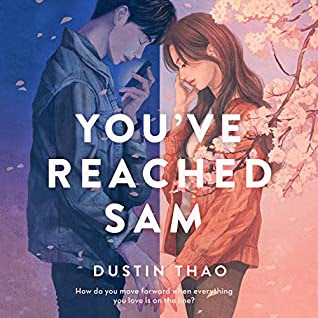
You've Reached Sam

by Dustin Thao
Date: 2021
Publisher: Macmillan Young Listeners
Reading level: YA
Book type: prose novel
Length: 9 hours 42 minutes
Format: audio book [unabridged]
Source: library

Dustin Thao's You've Reached Sam is a heartfelt audiobook about love and loss and what it means to say goodbye.

How do you move forward when everything you love is on the line?

Seventeen-year-old Julie has her future all planned out—move out of her small town with her boyfriend Sam, attend college in the city, spend a summer in Japan.

But then Sam dies. And everything changes.

Heartbroken, Julie skips his funeral, throws out his things, and tries everything to forget him and the tragic way he died. But a message Sam left behind in her yearbook forces back memories. Desperate to hear his voice one more time, Julie calls Sam’s cellphone just to listen to his voicemail.

And Sam picks up the phone.

In a miraculous turn of events, Julie’s been given a second chance at goodbye. The connection is temporary. But hearing Sam’s voice makes her fall for him all over again, and with each call it becomes harder to let him go. However, keeping her otherworldly calls with Sam a secret isn’t easy, especially when Julie witnesses the suffering Sam’s family is going through. Unable to stand by the sidelines and watch their shared loved ones in pain, Julie is torn between spilling the truth about her calls with Sam and risking their connection and losing him forever.

(synopsis from Goodreads)
I thought the premise of this one sounded so cool. A grieving girl who suddenly has the chance to reconnect with her dead boyfriend through a magic cellphone? Sign me up!

I'd read some not-so-stellar reviews of this one, but I thought I'd give it a try, anyway. The library had the audiobook, so I gave it a go.

Big mistake.

It's probably just one of those books that works better in print. Because the timeline skips around a lot, it's kind of hard to follow. I can't see scene breaks when I'm listening, so sometimes I was confused when Julie would suddenly be with Sam again. A lot of the confusion could've been avoided had the author used the past tense for flashbacks. But the majority of the book is written in the present tense, even when Julie is remembering things that happened in the past.

Speaking of those memories, I'm not a fan. They're almost like a fever dream, with one recollection dissolving into the next, and everything seems disjointed. These sections could've really helped flesh out the story, or made me understand the characters a little better. Sadly, much of the book seems like padding, and the various characters are unlikeable, underdeveloped, stereotypical, unpleasant, or just plain inconsistent. I don't even particularly like Sam, especially after he died; all those rules with their connection that are never explained almost seemed like manipulation.

When we find out how Sam died, I thought there would be more to it than that, especially since Julie spends much of the book in a "woe is me, it's all my fault" mode. In fact, a lot of people blame Julie for Sam's death, and the reasons why make absolutely no sense to me. The perpetual blame game comes across more like a plot device than anything else, and I was disappointed that there was no earth-shattering twist that explained what really went on that night and who was really to blame.

I'm not sure if I should even mention this next part, because I'll probably get flack for it, but I feel like it needs to be mentioned. This book is kind of racist. I'm already uncomfortable by the fact that a Vietnamese-American man decided to write the book from the point of view of a Caucasian girl... but not because authors need to stay in their own lanes. What irked me is that this choice seemed to be made as a subtle way to make a statement about race. Julie, a white girl, doesn't really have a cultural background; on the other hand, the book tries to glorify Asian culture (while simultaneously presenting it as a bit of a stereotypical monolith, which was a bit odd). Everything Asian is good (the people are model-beautiful, they bring pretty lunches to school, they're so inclusive they'll let white people into the Asian club, they're so in touch with their heritage, etc.), while a number of the white kids in the book are portrayed as one-dimensional bigots.

Anyway, even without that stuff, I'm not sure if I would feel much more favourably toward this book. It was kind of boring, in the end, and I never got the answers—or the characters—I wanted.

Also, sending flaming lanterns out into the wilderness in a state that regularly has wildfires is extremely irresponsible. And Julie wouldn't be walking under cherry blossoms during her first week of school. I'm surprised an editor didn't have something to say about these things...

Plot: 2/5
Characters: 2/5
Pace: 2/5
Performance: 3/5
Originality: 3/5
Enjoyment: 2/5

Overall: 2.33 out of 5

Thursday, May 12, 2022

Review - Unchosen [AUDIO]

Unchosen

by Katharyn Blair
Date: 2021
Publisher: HarperAudio
Reading level: YA
Book type: prose novel
Length: 10 hours 3 minutes
Format: audio book [unabridged]
Source: library

For Charlotte Holloway, the world ended twice.

The first was when her childhood crush, Dean, fell in love—with her older sister.

The second was when the Crimson, a curse spread through eye contact, turned the majority of humanity into flesh-eating monsters.

Neither end of the world changed Charlotte. She’s still in the shadows of her siblings. Her popular older sister, Harlow, now commands forces of survivors. And her talented younger sister, Vanessa, is the Chosen One—who, legend has it, can end the curse.

When their settlement is raided by those seeking the Chosen One, Charlotte makes a reckless decision to save Vanessa: she takes her place as prisoner.

The word spreads across the seven seas—the Chosen One has been found.

But when Dean’s life is threatened and a resistance looms on the horizon, the lie keeping Charlotte alive begins to unravel. She’ll have to break free, forge new bonds, and choose her own destiny if she has any hope of saving her sisters, her love, and maybe even the world.

Because sometimes the end is just a new beginning.

(synopsis from Goodreads)

I was looking through my book blog and realized I hadn't listened to an audiobook in over a decade. What?! Yeah, I know. But, to be fair, audiobooks and I don't always get along. Without visual input of some sort, my mind tends to wander. (Either that, or I fall asleep.) But I've been having trouble lately with starting books and then not finishing them, so I wondered if "reading" an audiobook might work better for me right now.

I haven't tried an audiobook in ages, and I also haven't read a young adult novel in a while. I think I might be getting too old for them. Or maybe I was just too old for this one. When the world has gone to hell and zombies are nipping at your heels, it seems a little ridiculous to start waxing poetic about some guy's shoulders. But... here we are.

I did really like the premise of this one, though. It's basically a post-apocalyptic zombie book, but the zombie thing is really unique. It's based on a curse rather than the usual virus, and it's spread through eye contact. This leads to some interesting work-arounds like the characters having to use mirrors to look at things, lest they get zombified.

Our main character is Charlotte, who's the inconsequential middle sister of three. Her older sister is some badass warrior, and her younger sister is literally the Chosen One who's supposed to save them all. On top of that, Charlotte is in love with her older sister's boyfriend, so things aren't running too smoothly in the family unit.

Once the story started to pick up a bit, and some villains were thrown into the mix, I found myself getting a little lost. Maybe it was because of the audio format, or maybe the book was actually just confusing. The pacing seemed uneven in spots, especially toward the end (which was a little lacklustre after all that buildup). I wasn't that impressed with the villains, either; they were your standard moustache-twirlers who enjoyed being evil just for the sake of it.

This probably wasn't the best book to ease me back into the world of audio. There was an awful lot of repetition, which was painfully obvious in audio format. (What I mean is that certain words and phrases were repeated way too close together, and characters' names were used too often when "he" or "she" would've sufficed.) I also wasn't a fan of this particular narrator, who would lower her voice for the male characters (which sounded silly) and harshen her voice for some of the female characters (making the villains, especially, sound more vapid than menacing). I do realize there's not much a single narrator can do with a book to differentiate the characters other than try to put on different voices. Still, I felt like the somewhat weird character voices were distracting and drew me out of the story at times.

Overall, I give the premise top marks for originality. The execution is a little lacking, though. Still, it will probably appeal to young adult readers who are looking for an interesting post-apocalyptic romp with a touch of romance.

Plot: 3/5
Characters: 3/5
Pace: 4/5
Performance: 4/5
Originality: 4/5
Enjoyment: 3/5

Overall: 3.33 out of 5

Tuesday, November 2, 2021

Review - Blister

Blister

by Jeff Strand
Date: 2016
Publisher: Sinister Grin Press
Reading level: A
Book type: prose novel
Pages: 275
Format: e-book
Source: Amazon.ca

They call her Blister. She’s a hideously disfigured twenty-three year-old woman, living in a shed next to her father’s house, hidden away from the world.

Jason Tray is a successful cartoonist, banished to his agent’s lakeside cabin for a few days of mandatory rest and relaxation. One night, while hanging out with a couple of the locals at a dive bar, he takes them up on their offer to go “see Blister,” having no idea what they’re talking about.

He peeks through the window at the most nightmarish thing he’s ever seen.

In the morning, he wakes up, hung over and regretful. He’s better than this. He needs to…apologize?

From the Bram Stoker Award-nominated author of PRESSURE, DWELLER, and WOLF HUNT comes a tale of fiendish secrets, ghastly crimes, and human monsters.

(synopsis from Goodreads)

Based on the fact that the top categories for this book on Goodreads are "horror", "thriller", and "romance", I think it's safe to say that Blister sort of defies categorization. I picked it up because I'd seen some good reviews of it, and when I read the preview, I liked what I saw. This actually turned out to be a surprisingly enjoyable read, even though it doesn't fit into the genres I tend to read the most.

The cover totally makes it look like this is going to be a terrifying gore-fest, but it's actually an interesting story about a secret in a small town. There are plenty of twists and turns along the way, some intriguing characters, and a great pace that keeps the story moving along at a nice clip. I really liked the narrator's voice; it never took itself too seriously (well, Jason did draw cartoons for a living, so he wasn't a super-serious sort of guy to begin with), and I found myself grunting with laughter at a few points while I was reading (which I rarely ever do).

I'm super picky about the technical stuff, so it says a lot that the story was good enough that I was able to overlook quite a few typos and other small mistakes and still enjoy the heck out of the book. Overall, though, the writing is fairly solid and there's nothing that made me want to fling the book across the room in a fit of pique.

I have absolutely no idea who I'd recommend this to. It's probably too dark for romance fans, too light for horror fans, and too silly for thriller fans. But if you're looking for something a little different, you might be pleasantly surprised like I was with this entertaining little morsel.

Premise: 4/5
Plot: 4/5
Characters: 3/5
Pace: 4/5
Writing: 4/5
Editing: 2/5
Originality: 4/5
Enjoyment: 4/5

Overall Rating: 3.63 out of 5 ladybugs

Tuesday, April 28, 2020

Review - 100 Days of Sunlight

100 Days of Sunlight
by Abbie Emmons
Date: 2019
Publisher: Abbie Emmons
Reading level: YA
Book type: prose novel
Pages: 310
Format: e-book
Source: Amazon.ca

When 16-year-old poetry blogger Tessa Dickinson is involved in a car accident and loses her eyesight for 100 days, she feels like her whole world has been turned upside-down.

Terrified that her vision might never return, Tessa feels like she has nothing left to be happy about. But when her grandparents place an ad in the local newspaper looking for a typist to help Tessa continue writing and blogging, an unlikely answer knocks at their door: Weston Ludovico, a boy her age with bright eyes, an optimistic smile…and no legs.

Knowing how angry and afraid Tessa is feeling, Weston thinks he can help her. But he has one condition — no one can tell Tessa about his disability. And because she can’t see him, she treats him with contempt: screaming at him to get out of her house and never come back. But for Weston, it’s the most amazing feeling: to be treated like a normal person, not just a sob story. So he comes back. Again and again and again.

Tessa spurns Weston’s “obnoxious optimism”, convinced that he has no idea what she’s going through. But Weston knows exactly how she feels and reaches into her darkness to show her that there is more than one way to experience the world. As Tessa grows closer to Weston, she finds it harder and harder to imagine life without him — and Weston can’t imagine life without her. But he still hasn’t told her the truth, and when Tessa’s sight returns he’ll have to make the hardest decision of his life: vanish from Tessa’s world…or overcome his fear of being seen.


100 Days of Sunlight is a poignant and heartfelt novel by author Abbie Emmons. If you like sweet contemporary romance and strong family themes then you’ll love this touching story of hope, healing, and getting back up when life knocks you down.

(synopsis from Goodreads)

It's been over a year and a half since I last read a young adult novel. Maybe it was my one-star experience there that turned me off, or maybe I just got tired of seeing the same old problems in books written for that age group. In any case... it's been a while. So why did I pick this one up?

I was searching for graphic design videos on YouTube when I spotted one of Abbie's videos. I watched it, and then I realized that she's the author who wrote that self-pubbed novel with the gorgeous cover that I'd put on my "want to read" list months ago. As I watched more of her videos, I began to get curious. She seemed to know what she was talking about, so I reasoned that her book was probably pretty decent. So I checked out the preview on Amazon, decided it looked like it might be a worthwhile read, and bought it.

The first thing I want to talk about here is the self-publishing aspect. I've seen other reviewers make assumptions about Abbie getting a publishing deal because she's a YouTuber. Nope. 100 Days of Sunlight is a self-published book (which you can learn more about in some of her videos). Having read quite a few self-published books, I've come to the conclusion that they're often... well, terrible. This book kind of shatters that perception, though. When an author really takes the time to properly organize, plan, write, edit, get feedback, and pay attention to good design, the results can really pay off. 100 Days of Sunlight does not seem self-published. In fact, I would encourage anyone who's thinking of self-publishing their own book to buy a copy of this one to see how it should be done. Everything--the cover, the layout, the editing, the e-book's price point--gives a reader the impression that they're looking at something that's come out of a traditional publishing house. In fact, I can count on my fingers the number of technical mistakes in the writing... which is more than I can say of some books to come out of the big publishers. (Hey, errors happen. The fact that they didn't happen until almost the very end is really impressive; I'm used to seeing them start to creep in after the halfway point.)

Let's talk about the story. It's your standard YA contemporary romance (I'm guessing... since this is not my preferred genre), complete with characters who are about one quip away from bursting into song surrounded by cuddly forest critters. Were it not for the alternative POV and Weston sharing his backstory in flashbacks, we would've had a Manic Pixie Dream Boy on our hands. (I mean, the guy makes waffles and plays a yellow ukulele while trying to help the heroine see the brighter side of life.) The comparisons to Augustus Waters are pretty much inevitable. But Emmons avoids falling into the MPDB trap trope by letting us get inside Weston's head. And, actually, it's really his story. I found that, as I was reading, I was far more invested in his narration than I was in Tessa's, despite her problems being the catalyst for the whole story. I thought Tessa wasn't developed quite as well, and there were things about her that seemed to be obvious attempts to make her character more interesting... when they really didn't. I'm talking about things like her overly nasty attitude at the beginning, her mother (that could've been interesting to work into her character development, but it seemed more like an effort to make her family seem unconventional), and her strange comments about holding Weston's hand being "inappropriate" (I know this is a sweet little YA novel, but... hand-holding?). As for Weston, I liked him for the most part... but he lost me for a bit somewhere in the middle with his attitude about disability. This isn't the first time I've seen this attitude from those with physical disabilities, and maybe Emmons was aware of this when she put the words in Weston's mouth, but as someone with a non-physical disability, it really pissed me off:

"You see, most people would look at me and say that I have every right to be miserable. But I don't. I have no right. I have no right. And neither do you."

When a reader is struggling with something like depression, anxiety, OCD, PTSD, or bipolar disorder, it's painful to read something like that. Painful, and incredibly invalidating. When some of these conditions, by their very nature, can make you miserable (as in, you have no control over what emotions are sweeping over you at any given moment, no matter how hard you try to plaster a smile on your face), to have a character--a hot, wish-fulfillment sort of character, at that--basically dismiss you as someone who's choosing to be miserable, who doesn't even have a right to their own feelings, it can be tough. Don't get me wrong: I like Weston. But I do wish authors would be a little more cautious when they try to include messages like this in their work. Someone like Weston can overcome their challenges with a lot of hard physical work. But if your challenge is a mental illness that actually makes you miserable, it's not as easy. In fact, for some, it might be impossible.

Aside from that, the plot is pretty generic, and suffers a little from being somewhat contrived. Some of that could've simply been avoided by setting this, say, twenty years ago. As it is, some readers are going to inevitably wonder why Tessa needs a typist in the first place. She's got Siri on her phone, so we know this world has voice-recognition technology. Why wasn't it used? (For that matter, making Weston sit in the bottom of the tub to take a shower just seemed like an opportunity to show him feeling pathetic. Does this world not have adaptive technologies? His parents bought him running blades, but they couldn't spring for shower legs?) Some of the dialogue is kind of treacly, and doesn't always ring true. The child characters don't sound quite right to me (including 13-year-old Weston and his friends), and the grandparents are likewise a little off. Maybe it's just that most of the book is squeaky clean, and much of the dialogue sounds a bit formal. Nobody I know talks like this, but maybe they do in other parts of North America.

I know all that makes it seem like I didn't like it, but that's not true. I'm not sorry I read it. I just don't think I'm the audience for this sort of thing. However, I would still recommend it to readers who enjoy YA contemporary romance, and I would also recommend it to those who are interested in self-publishing as an example of how to get it right (because goodness knows there are enough examples out there of how to get it wrong).

Premise: 3/5
Plot: 3/5
Characters: 3/5
Pace: 3/5
Writing: 3/5
Editing: 4/5
Originality: 4/5
Enjoyment: 3/5

Overall Rating: 3.25 out of 5 ladybugs

Saturday, June 23, 2018

Review - The Tallest Doll in New York City

The Tallest Doll in New York City
by Maria Dahvana Headley
Date: 2014
Publisher: Tor.com
Reading level: A
Book type: short story
Pages: 8
Format: e-book
Source: Tor.com

Nebula Award-nominated author Maria Dahvana Headley has always loved Damon Runyon's stylized faux-reporting on New York City. This is her version of a Runyon tale—this one dealing with the architectural guys and dolls of New York City—and a valentine to all the beautiful buildings she knows.

It's Valentine's Day, 1938, and the Chrysler Building's tired of waiting on the corner of Forty-second and Lex for a certain edifice to notice her. Here's the story of what might happen if two of New York's greatest creations met on a day built for romance.

(synopsis from Goodreads)

What the...?!

This was totally surreal and, for me, kind of stupid. I'm guessing the author was trying to imitate a particular style, but it really didn't work for me. I found the narrator (a human waiter in the Cloud Club in the Chrysler Building) to be insipid and underdeveloped. The language--though probably historically accurate--was also irritating; the objectification of women by continually calling them "dolls" throughout the story grated on my nerves after a while. (Would the average person really have used that word that much, or was this written too much from the perspective of a modern author trying desperately to evoke a sense of time and place?) The writing style itself also bothered me. It was all in present tense, even when recounting past events; it made for some confusing bits.

I guess the idea of a couple of buildings who've stared at each other for years finally pulling themselves off their foundations to go have sex in the ocean on Valentine's Day might be kind of a cute idea... but only if you're really good at suspending disbelief. This was just too far out there for me, and I didn't really care about what was happening... to either the buildings or the human characters within.

At least this story is extremely short.

Quotable moment:

We joke about working in the body of the best broad in New York City, but no one on the waitstaff ever thinks that the Chrysler might have a will of her own. She’s beautiful, what with her multistory crown, her skin pale blue in daylight and rose-colored with city lights at night. Her gown’s printed with arcs and swoops, and beaded with tiny drops of General Electric.

Plot: 2/5
Characters: 2/5
Pace: 3/5
Writing & Editing: 2/5
Originality: 3/5

Enjoyment: 1/5

Overall Rating: 2 out of 5 ladybugs


Tuesday, February 10, 2015

Top Ten Tuesday - Top Ten Things I Like/Dislike When It Comes To Romances In Books

Top Ten Tuesday is hosted at The Broke and the Bookish.

This week's topic is Top Ten Things I Like/Dislike When It Comes To Romances In Books.  I'm going to split it, since I'm neither 100% pro-romance nor 100% anti-romance:

Romance tropes that make me swoon:

average/disfigured/not-quite-pretty girl gets the hot guy - While it's not really a reflection of real life (at least, not from what I've seen; if anything, you see the opposite), it's nice to see in books.  Why?  Because, if it's done right, then the attraction is based on something deeper than looks.  Maybe the guy loves the heroine's kindness... or her intelligence... or the way she doesn't back down when she knows she's right.  (Note that I'm not talking about the self-deprecating heroine who bemoans her imagined ugliness while simultaneously being drooled over by every guy in the vicinity.)

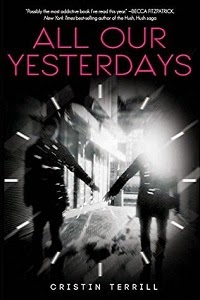
Some examples are All Our Yesterdays by Cristin Terrill and All the Truth That's in Me by Julie Berry.

characters who have lives apart from pining over each other - I want characters to be defined before the romance begins.  If it seems like they have no lives apart from making goo-goo eyes at each other, I'm going to get bored really quickly.  I want characters to have interests and hobbies and things they can discuss with each other; otherwise, what is the romance based on?  Pure lust?

Good examples of books with characters with back-stories who end up in romances are The Hunger Games by Suzanne Collins, Jessica's Guide to Dating on the Dark Side by Beth Fantaskey, and The Raven Boys by Maggie Stiefvater.

couples who start out as friends - These romances are the ones where the two parties have known each other for a while -- maybe years -- before realizing their feelings have morphed into something more.  These relationships start out on a strong footing and build from there.

Books that use the "friends first" idea are All Our Yesterdays by Cristin Terrill, All the Truth That's in Me by Julie Berry, and Wrapped by Jennifer Bradbury.

love triangles that just happen - When there's a love triangle that just sort of happens, where you can't see the author's heavy-handed plotting, then it can work really well.  Often, these love triangles will involve people who've known each other for a while, so when the romance comes into the picture, it seems more organic.

Some good examples of nicely handled love triangles can be found in All Our Yesterdays by Cristin Terrill and The Hunger Games by Suzanne Collins.

drawn together by weirdness - Past lives, apocalypses, supernatural powers... these sorts of things have the potential to draw people together when they're forced to deal with them.  I like reading about characters who fall in love despite strangle obstacles.  I mean, if their relationship can survive one party remembering their past life as a werewolf hunter while dealing with frogs raining from the sky during a governmental collapse, as well as trying to harness their new-found invisibility... it can probably survive anything.

Fun examples include The 57 Lives of Alex Wayfare by M. G. Buehrlen, Daughter of Smoke & Bone by Laini Taylor, Dream Boy by Mary Crockett & Madelyn Rosenberg, Every Day by David Levithan, My Name is Memory by Ann Brashares, and Wondrous Strange by Lesley Livingston.


Romance tropes I wish I could get a restraining order against:

the "bad boy" who's not really bad - Chalk this one up to weak characterization.  If the love interest is supposed to be a bad boy, show him doing bad things!  If he comes across as a decent guy, then I'm going to spend a lot of time wondering why the heroine shouldn't be with him.  His reputation is not enough to answer that question.

Some examples are found in My Super Sweet Sixteenth Century by Rachel Harris and The Unbecoming of Mara Dyer by Michelle Hodkin.

insta-love - People don't generally fall in love at first sight.  Simple attraction is often mistaken for love.  In my opinion, it takes more than attraction to equal love.  It should be built up slowly as the characters get to know each other.

Some good (or bad, depending on how you look at it) examples can be found in Escape from Eden by Elisa Nader, Magic Under Glass by Jaclyn Dolamore, Neverland by Anna Katmore, and Timebound by Rysa Walker.

if he tries to control you, it means he loves you - Edward Cullen set the bar pretty high here, but there are plenty of other "control masquerading as true love" stories out there.  If the guy's telling you what to do, how to dress, and whom you can see, there's a problem.  I'm not talking about the stories where this behaviour is addressed; I take issue with the books that normalize that sort of thing and teach girls to put up with being bossed around by a man.

See Ice by Sarah Beth Durst, Splintered by A. G. Howard, and Eclipse by Stephenie Meyer.

the old, hot pervert - There's a disturbing trend in YA: old men are somehow suitable love interests for teenage girls.  Apparently, if a guy looks young, that's all that matters.  That excuse certainly wouldn't fly in real life, and I'm kind of tired of seeing it in YA novels.  And we wonder why 13-year-old girls keep running away to meet up with 40-year-old men they met online.  The books they're reading tell them it's perfectly okay!


Some squicky age dynamics can be found in Dreaming Anastasia by Joy Preble, Elsewhere by Gabrielle Zevin, and Evermore by Alyson Noël.

pregnancy as a plot point - I do not want to see this in the YA books I read unless it's a hard-hitting contemporary novel about the challenges of teenage pregnancy.  Yes, I know teenagers have babies in real life... but in my opinion, it's not romantic and should not be glorified as such.  Chances are, the guy who knocked up the heroine will be gone shortly, leaving his (often) paranormal spawn and responsibility behind.  At least, that's probably what would happen in real life (minus the paranormal part).

Books that should've left the procreating out are Breaking Dawn by Stephenie Meyer, Ice by Sarah Beth Durst, and Salt by Maurice Gee.


What do you like or dislike about romance?


Friday, August 28, 2009

How to Write Your Very Own Young Adult Paranormal Romance

Note: This is just for fun. I'm not doing this to attack any particular book or series. I just noticed a pattern and I thought it would be amusing to write a little bit about it.

How to Write Your Very Own Young Adult Paranormal Romance

1. Characters

Since most of your readers will be young women between the ages of 13 and 21, you'll want to have a protagonist in that age group. Make her about 18 or so; this way, the younger girls will have something to aspire to, and the older girls will have someone they can relate to. Your protagonist should either be a) beautiful, but unaware of her beauty; or b) beautiful and aware of it, but full of false modesty. In either case, your protagonist should have fairly low self-esteem. This will allow her to complain about her looks, inviting others to tell her how beautiful she really is. Your protagonist should be a normal human (as opposed to some sort of supernatural creature). If she is something other than human (or superhuman!), this must be withheld from the reader until the last couple of pages. Dropping hints is okay, but realize that your readers are probably going to figure it out long before you think they will. They're not stupid.

Now for the main character's love interest. He should be tall; this ensures that your protagonist will have to gaze up longingly into his eyes. He should have a good head of hair that can be described as "thick", "lustrous", or "flowing". These guys are never bald. Their eyes should have some noteworthy characteristic (and even if they're just plain ol' brown eyes, make sure you mention them as many times as possible). And in paranormal romance, this is the place for a supernatural creature. Whether you decide to make him a vampire, a werewolf, a shapeshifter, or an immortal, there are a few rules to keep in mind:

Paranormal creatures (especially hot, sexy ones) don't have bodily functions. They never go to the bathroom, even if they eat. Have you ever seen a werewolf have to excuse himself because his dinner of deer and/or wayward Boy Scout didn't agree with him? Of course not. This is because normal bodily functions are decidedly not sexy, so any mention of them should be avoided.

These guys always have a tragic past. Maybe they were beaten and abused as children. Maybe they lost the love of their life years (or decades... or centuries) earlier. Maybe they were turned into what they are against their will. In any case, they're now a wounded character. Milk this for all it's worth. Shows of sympathy from your protagonist (preferably involving gentle caresses where she brushes his flowing hair from his face) are a good way to do this. But remember... these guys don't want to talk about it. If you make them spill the beans too quickly, they might come across as... well, a little too girly for a leading man.

Don't worry about keeping to a particular set of creature traits, either. In today's fiction, you can get away with pretty much anything. Your vampire doesn't need to drink blood, sport fangs, and turn into a bat. One attribute is enough, and you can use the term "vampire" all you want. The same goes for werewolves, shapeshifters, immortals, fairies, selkies, mermaids, or any other paranormal creature. After all, you want to put your own spin on it, and you can't do that if you're hemmed in by conventions.

2. Plot

Whatever you do, don't come up with your own story! Stick with the tried-and-true. (There are no new ideas anyway, right?) The basic formula can be summed up in the following:

A hot new guy shows up at the local high school and seems to have eyes only for your protagonist. Your protagonist is both attracted and repelled by this mysterious teen hottie, who, of course, turns out to be some sort of supernatural creature. By the end of the story, they will be madly in love, and the girl will have been turned into one of her love interest's own kind.

The protagonist should vascillate between loving this paranormal cutie and wishing he would just go away. Don't forget, though: by the end of the book, she should have cycled back into loving him (if this hasn't happened, you need to add some more padding, some banal incident that will bring her back around).

Oh, and don't forget: all books in this genre must include a reference to Wuthering Heights. It's absolutely compulsory. The easiest way to do this (especially in young adult fiction) is to have the characters read the book in their high school English class. Then, let the dysfunctional relationship comparisons begin!

3. Writing Style

Write your book in the first person point of view (i.e., as if your main character is telling the story). You get bonus points if you write in the present tense. It just makes everything seem more immediate. With this point of view, the protagonist doesn't know any more than we do.

Make sure that your characters do strange things with their eyes. Have their eyes caress their lover's body, graze their surroundings, and bounce around the room. This adds an element of humour to the story, since such wording can be interpreted in a couple of ways. On a related note, break out your thesaurus when you're writing your speech attributions. Your characters should never "say" anything. They should murmur, whisper, screech, laugh, stammer, sigh, and shudder their words whenever possible. This helps give the reader an idea of how the character is feeling, and it cuts down on wordiness. Plus, it's fun for your reader to imagine what shuddered sentences actually sound like.

Finally, you'll want to create your own style and voice. An easy way to do this is to write incomplete sentences, repeatedly use that cool word you found in your dictionary and just had to incorporate, make up words, and use original punctuation. If you do these things, your readers will remember your book and your work will stand out.

!!!